My Favorite Sister Bought Me This Shirt
As an embroidery designer who has tested countless machine embroidery designs, I always approach a new file with a critical eye. The design needs to work not just on paper, but in the real world—on fabric, under tension, and through the hoop. That’s why when I came across the "My Favorite Sister Bought Me This Shirt" graphics, I put it through a practical review before considering it for any of my handmade products or client projects.
First Impressions: Sentimental Yet Stylish
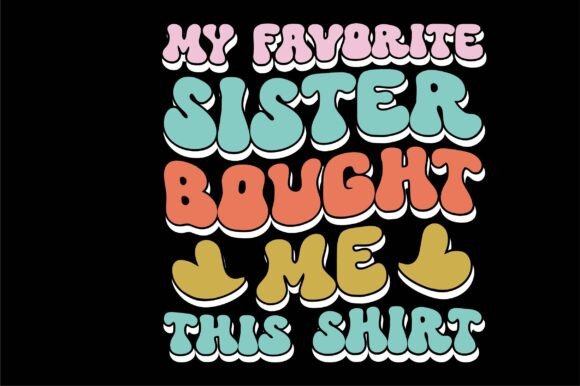
The phrase itself is warm and personal, which makes it a great fit for family-themed embroidered patches, custom apparel, and even holiday gifts. Visually, the layout is clean and modern, with a soft font that balances readability and charm. It's clear this is intended as a sweatshirt embroidery or tote bag design, especially for those creating personalized items like birthday gifts or handmade baby clothes.
I appreciate how the text flows naturally, avoiding any awkward spacing or alignment issues. The sentiment is lighthearted yet heartfelt, and the design feels versatile enough to adapt into various color schemes and fabric types. Since it’s labeled as a printable sublimation design, I was curious how it would translate into traditional embroidery formats. Fortunately, the 100 editable and color-changeable files offer flexibility for most embroidery machines and creative platforms like Adobe Illustrator (Ai).
Real-World Application: T-Shirts, Totes, and More
Let’s talk about what happens when you take this design from your screen to the hoop. For a standard custom t-shirt, especially in light colors like white, ivory, or pastels, the design works well. The stitch count isn’t mentioned, but based on the layout and character count, I’d estimate it fits within a 6x10 inch hoop size comfortably. Just make sure to test it on scrap fabric first—it’s a simple but important step in every embroidery project.
This design shines particularly well on cotton-blend shirts and canvas tote bags. The soft curves of the text and minimalistic style complement the casual nature of these products. For Etsy sellers and craft business owners, this could be a great addition to seasonal offerings or boutique-style merch. Imagine adding it to a cozy sweatshirt for a Mother’s Day gift or using it as part of a themed collection for family-oriented small shops.
If you're working with babies' clothes, keep in mind that the text may need simplification or resizing to avoid overwhelming smaller garments. However, for larger pieces like pillow covers, aprons, or decorative wall art, the design can be scaled up without losing its personality. It also adds a nice touch to kitchen towels or nursery decor, where a gentle message can enhance the aesthetic while maintaining functionality.
What About Commercial Use?
Many of us are looking for commercial embroidery assets that can be sold without legal hiccups. While the product description mentions “digital product previews” and “design assets,” it doesn’t specify licensing terms. As someone who sells finished goods and digital embroidery files, I always recommend confirming whether the design is royalty-free or requires attribution before using it in production or reselling it online.
Where to Use With Caution
While the "My Favorite Sister Bought Me This Shirt" design is generally adaptable, there are a few scenarios where it might not perform at its best:
- Small Hoop Sizes: If you're trying to squeeze this onto a tiny surface like a cap or embroidered patch, you’ll likely lose clarity and impact. Resize carefully, and consider bolding key letters or simplifying the text.
- Textured or Stretchy Fabrics: The subtle curves in the font may distort slightly on stretchy materials or fabrics with a rough texture. A smooth cotton or polyester blend will give the best results.
- Dense Stitch Areas: If the design includes fill stitches or intricate details, they might cause puckering or stiffness if stitched too tightly. Review the stitch density settings in your software before committing to a full run.
- Dark Fabric Backgrounds: The thread color contrast is crucial here. Light-colored threads won’t pop as well on black or navy bases. Consider switching to a dark background-friendly palette if you plan to use it for such applications.
Also, because of the detailed corners and potential for fine lines, testing on different stabilizers is recommended. A tear-away stabilizer may suffice for most uses, but for commercial small shop product runs, a cut-away or wash-away stabilizer could help maintain quality over time, especially for items that undergo frequent washing.
Design Impact: From Personal to Professional
One of the things I love about this design is how it bridges the gap between personalized gifts and professional handmade product branding. Its friendly tone invites connection, making it ideal for gift-based projects. But it also carries a level of sophistication that can elevate a custom apparel line or add warmth to a holiday embroidery collection.
Visually, it enhances the product value by offering a unique, thoughtful message. Customers often look for something memorable in their purchases, and this phrase hits that sweet spot. Whether it’s a family gift or part of a curated collection for a local craft fair, the design brings emotional resonance to the item, increasing buyer engagement and repeat sales potential.
From a brand-building perspective, using this design consistently across multiple products—like matching shirts for siblings or coordinating nursery decor—can create a sense of identity. It helps creative entrepreneurs and handmade shop owners stand out in a crowded market by delivering something both meaningful and stylish.
Designer Notes: What You Should Know Before Embarking
Here are some quick tips I’ve picked up after working with this design:
- Test First: Always try the design on a piece of scrap fabric before moving to final products. It gives you a realistic idea of how it behaves under stitching pressure.
- Check Thread Colors: Make sure the chosen palette matches your fabric and complements your brand. Using black and white mockups can help visualize how the design will appear once stitched.
- Review Stitch Density: Especially if you’re planning high-volume production, denser areas might lead to puckering. Adjust accordingly for each fabric type.
- Confirm Hoop Size: Even though it seems manageable in most cases, double-check the required dimensions for your machine and project.
- Inspect Small Details: Look closely at lettering and spacing. Tiny imperfections can become noticeable once transferred to fabric.
- Use Proper Stabilizer: Depending on your material, choose a stabilizer that prevents distortion and maintains shape post-stitching.
- Confirm Licensing: If you're planning to sell finished items or digital embroidery files, ensure the design allows for commercial use. Avoid assumptions—check with the seller.
Final Thoughts
The "My Favorite Sister Bought Me This Shirt" design is more than just a catchy phrase—it’s a conversation starter and a sentimental statement wrapped in a neat visual package. As an experienced embroiderer, I found it easy to customize, suitable for a wide range of projects, and capable of enhancing both giftability and brand recognition. Just remember to treat it with care when scaling down, adapting to stretchy or textured fabrics, and preparing for commercial sale.
For embroidery designers and crafters aiming to build a cohesive line of T-Shirt Designs and Graphics, this could be a valuable addition to your repertoire. It’s the kind of design that feels authentic and personal, yet still polished enough to represent a professional finished product.
So go ahead—try it out on your next handmade product, but don’t skip the prep work. Your customers—and your machine—will thank you for it.